The Lasting Impact
In Our Own Words
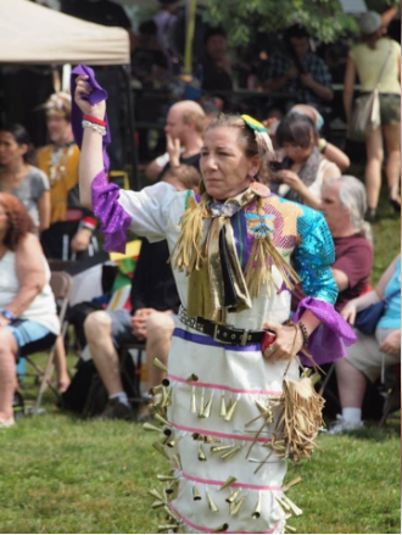
“How’re you going to know how to be a parent when you never had parents, if you were raised in an institution. If you weren’t shown that love and caring of what it is to be a family or what is to be a mother, then how are you going to know when you have your own children?”
– 60’s Scoop Survivor Sharon Boutilier
The Millennial Scoop
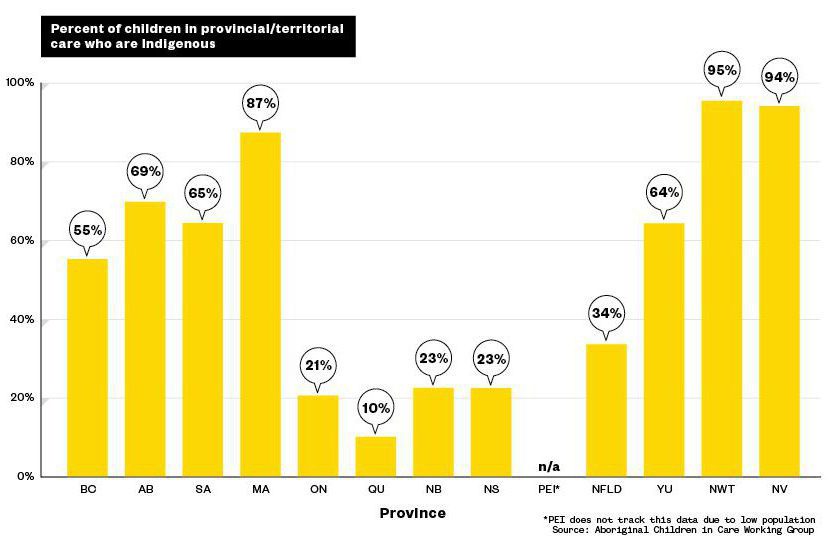
Indigenous children are still overrepresented in the child welfare system today. In Ontario, Indigenous children represent approximately 30% of foster children, despite making up only 4.1% of the population under age 15. According to a May 2008 report from the Auditor General of Canada, Indigenous children are still vastly overrepresented in care, with 51% of all children in care in British Columbia, Canada, being Indigenous. Additionally, according to the report, Aboriginal children in British Columbia are “six times more likely to be taken into care than a non-Aboriginal child.” In Manitoba, between 1971 and 1981, approximately 3,400 Indigenous children were adopted, with up to 80 percent to non-Indigenous homes. (Canadian Encyclopedia)
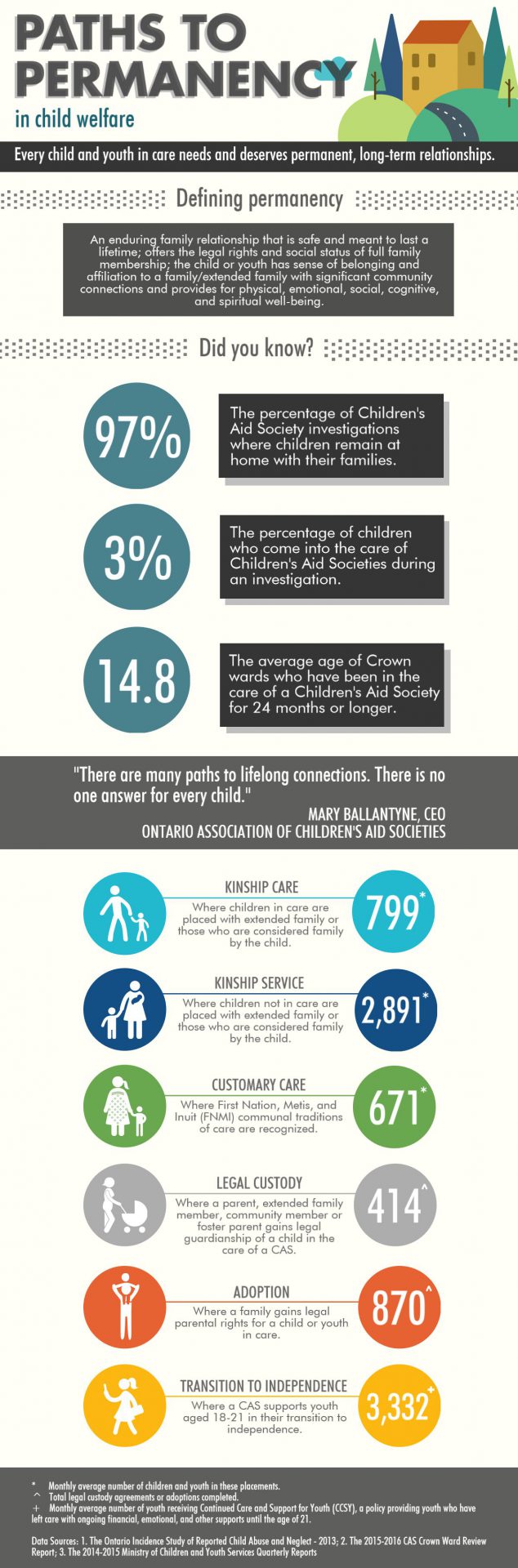
This Paths to Permanency shows that out of all open child welfare cases only 3% of those case are children brought into the care of children’s aid and taken out of their homes.
So if only 3% of all children come into care of Children’s aid why are so many indigenous? As you see in this next graph which shows the high percentages of indigenous children in the system into the next era of the millennium scoop. This graph shows the indigenous children in care percentages across Canada.
The Truth and Reconciliation Commission (TRC) of Canada
The Truth and Reconciliation Commission (TRC) of Canada: Calls to Action were released on December 15, 2015. Prime Minister Justin Trudeau made a commitment to implement all 94 calls to action. Calls to Action 1-5 are specific to Child Welfare’s responsibilities to Indigenous Families.
Family and Children’s Services and Children’s Aid Societies in Ontario have committed to:
- Reduce the number of Indigenous children in care;
- Reduce the court cases involving Indigenous children and families;
- Increase the use of formal customary care agreements;
- Increase Indigenous representation and involvement at the local Board of Directors;
- Have mandatory Indigenous training for staff;
- Change their inter-agency protocol to include Jordan’s Principle;
- Consult with Indigenous communities to develop a plan to help children and families from the communities;
- Develop relationships between their agency and the local Indigenous communities;
- Help people who want to see their historical files by providing the information they want.
Photo of 60’s Scoop Survivors and Supporters
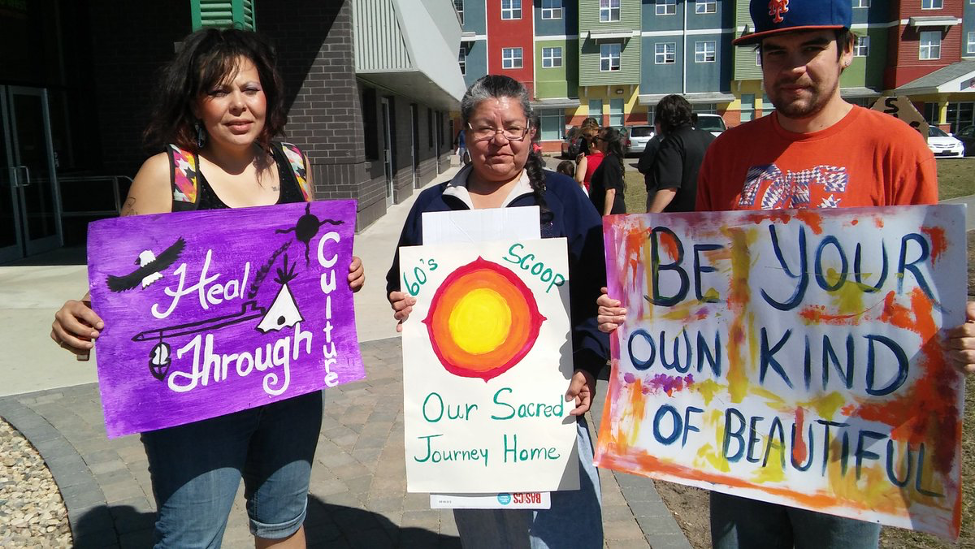
From online radio site MBC News on April 29, 2016.